Best Massage for Jet Lag Recovery in Guangzhou
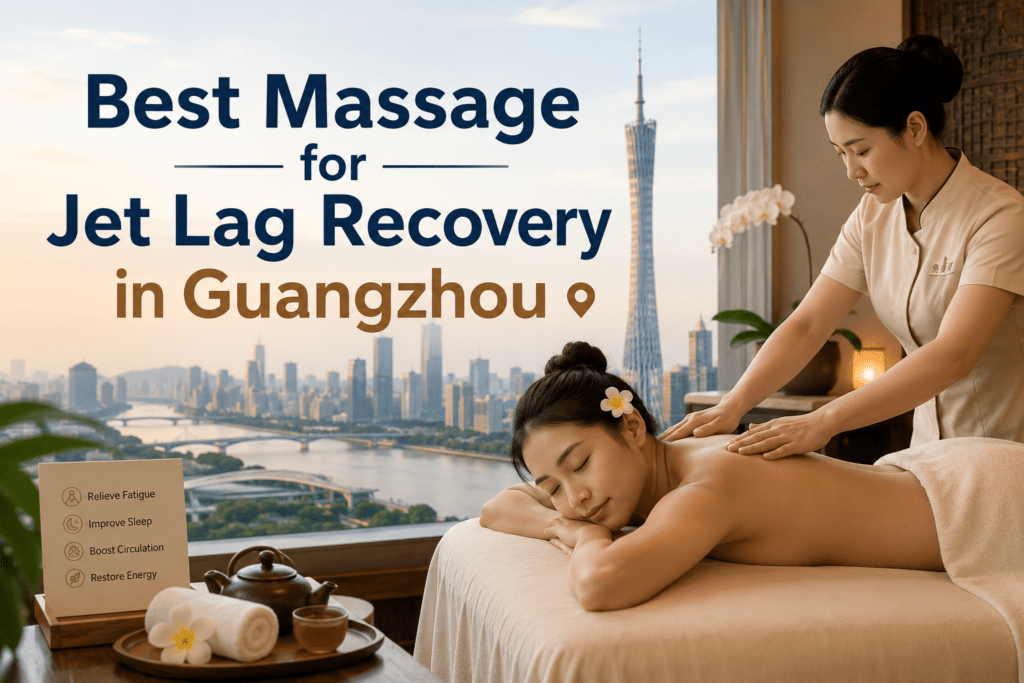
Jet lag hits hardest in Guangzhou — a city where your first meeting might begin less than 24 hours after landing. Professional massage therapy won’t reset your body clock overnight, but the right treatment at the right time can meaningfully reduce muscle stiffness, lower stress hormones, improve circulation, and — critically — help you fall into deeper, more restorative sleep. This guide covers which massage styles work best for jet lag recovery, when to book them, and why in-room hotel massage is often the most practical choice for time-pressed international visitors.
✨ Key Takeaways
- Swedish massage is the best first-night option — it activates the parasympathetic nervous system and prepares the body for deep sleep
- Deep tissue massage targets the back, neck, and shoulders locked up after 12+ hours in a plane seat
- Foot reflexology directly relieves the swelling and circulatory stagnation that long-haul flights cause in the lower legs
- In-room hotel massage is more practical than a spa visit on arrival day — no travel, no language barrier, immediate access to sleep afterward
- Book within 2–6 hours of check-in for the strongest recovery benefit before your first full day of commitments
- Combining massage with hydration and morning light exposure compresses a 5-day jet lag adjustment into 2–3 days
Introduction
Guangzhou is one of those cities that doesn’t wait for you to settle in. If you’re arriving for the Canton Fair, a factory audit, or a week of supplier meetings, the city’s pace demands that you perform at a reasonable level from day one — not day three or four, which is when most long-haul travelers naturally start feeling human again. That gap between when your body is ready and when your schedule requires you to be sharp is exactly where smart recovery strategy matters.
Jet lag is a genuine physiological condition, not just tiredness. When you cross eight or twelve time zones to reach Guangzhou from Europe or the Americas, your circadian rhythm — the biological clock that regulates sleep, hormone release, body temperature, and digestion — is running on a completely different schedule from the city around you. It takes approximately one day per time zone crossed to fully recalibrate, which means visitors from New York or London are looking at a week-plus adjustment in the absence of active intervention.
Professional massage therapy won’t override circadian biology, but it addresses several of the most debilitating symptoms directly: the muscle stiffness from prolonged immobility in cabin seating, the elevated cortisol that makes sleep elusive even when you’re exhausted, the circulatory sluggishness that leaves your legs heavy and your feet swollen, and the physical tension that compounds into headaches and back pain over a long flight. Targeted bodywork in the first 24 hours after arrival can make a measurable difference to how you feel and function across the entire trip.
Why Jet Lag Hits Harder in Guangzhou
Not every destination creates the same recovery challenge. Guangzhou’s particular combination of factors — extreme time zone distance from major source markets, subtropical climate, high-density urban environment, and business-first visitor profiles — makes jet lag management more consequential here than in many other cities.
Visitors from Western Europe face a 7–8 hour time shift. Those arriving from the US East Coast are dealing with 12–13 hours. These are among the largest possible circadian disruptions, and the body’s adaptation timeline scales with the gap. Add 11–14 hours of direct flight time (longer with connections), and most intercontinental arrivals reach Guangzhou carrying a significant physiological deficit before the trip has even technically begun.
The city’s climate compounds physical recovery. During Canton Fair seasons — April and October — Guangzhou’s humidity and temperatures can feel demanding to visitors from cooler climates, adding mild physiological stress on top of travel fatigue. And unlike leisure destinations where you might give yourself a gentle first day, Guangzhou’s business culture moves quickly. Suppliers expect you at the table. The fair floor opens at 9 a.m. Recovery has to happen fast or not at all.
What Jet Lag Actually Does to Your Body
Understanding the specific mechanisms helps you match the right recovery tool to the right symptom. Jet lag isn’t a single condition — it’s a cluster of distinct physiological disruptions, each of which responds to different interventions.
Muscle stiffness and compression come from 10–14 hours of sustained immobility in aircraft seating. The hip flexors shorten. The thoracic spine compresses. Blood pools in the lower legs. No amount of sleep resolves this — it requires movement or physical treatment.
Sleep disruption is the core jet lag mechanism — your brain is releasing melatonin at the wrong local time, making sleep onset difficult even when you’re physically exhausted. The resulting sleep is often fragmented and unrefreshing.
Elevated cortisol is a stress response to the combination of travel demands, time pressure, and circadian disruption. High cortisol suppresses immune function, impairs concentration, and directly interferes with sleep quality.
Dehydration from cabin air — typically 10–20% relative humidity, far below normal — worsens headaches, mental fog, and muscle function. Many travelers arrive already dehydrated before the jet lag itself sets in.
Digestive disruption from irregular meal timing, different food, and reduced physical activity is common and often underestimated as a contributor to overall discomfort and energy depletion.
Best Massage Types for Jet Lag Recovery in Guangzhou
Different massage styles target different components of travel fatigue. Matching the treatment to your primary symptoms produces significantly better results than a generic booking.
Swedish Massage — Best for First-Night Recovery
Swedish massage uses long, flowing strokes and gentle kneading to activate the parasympathetic nervous system — the body’s rest-and-digest state. It reduces circulating cortisol, slows the heart rate, and creates the physiological conditions that allow genuine deep sleep. For most jet-lagged travelers, this is the single most useful treatment on the night of arrival, because it directly addresses the reason sleep remains elusive even when the body is exhausted: the nervous system is still running in high-alert mode.
A 60–90 minute Swedish session in the early evening, followed immediately by sleep in your own hotel room, is one of the most effective first-night recovery protocols available. The treatment works best when the room is quiet and cool afterward — conditions easily met in any decent Guangzhou hotel room.
First night arrivalSleep supportStress reductionAll traveler types
Deep Tissue Massage — Best for Flight-Stiffened Muscles
If you’ve spent 12 hours in economy class — or even a cramped business class seat — your lower back, neck, and shoulders have taken a sustained compression load that Swedish massage alone won’t fully resolve. Deep tissue work applies targeted, sustained pressure to the deeper muscle layers and connective tissue, breaking down the adhesions and trigger points that form from prolonged immobility.
This is the right choice if back pain, neck stiffness, or shoulder tension is your dominant complaint after a long flight. Many Canton Fair visitors who spend days standing on hard exhibition floors combine a deep tissue treatment mid-trip with a Swedish session on arrival — addressing both the flight-related compression and the accumulating fair-week fatigue in a single stay. For more on how business travelers use this approach, see our guide on why business travelers choose hotel massage in Guangzhou.
Back painNeck & shoulder stiffnessMid-trip recoveryEconomy class fatigue
Foot Reflexology — Best for Swollen Legs and Circulation
Extended time in pressurized cabins reduces venous return from the lower extremities, causing fluid accumulation in the feet and ankles. Many long-haul travelers notice that their shoes fit noticeably tighter after landing. Foot reflexology applies structured pressure to specific points on the feet and lower legs, stimulating circulation, reducing edema, and providing targeted relief to the muscles that absorb the most impact during standing and walking.
For Canton Fair attendees covering 10–15 kilometers per day on concrete exhibition floors, a foot reflexology session after the first day on the floor can prevent the kind of progressive stiffening that has some visitors barely walking by day three. It’s also a useful supplementary treatment after a Swedish or deep tissue session — many providers in Guangzhou offer combination packages. See our full breakdown of top massage options near Canton Fair Guangzhou for specific recommendations.
Swollen feet & anklesCirculationCanton Fair visitorsPost-flight lower leg fatigue
Traditional Chinese Tui Na — Best for Full-Body Energy Reset
Tui Na is a Chinese medicine-based manual therapy that works along the body’s meridian pathways using rhythmic compression, rolling, and joint mobilization techniques. It differs from Western massage styles in both technique and philosophy — the goal is to restore the flow of qi (energy) through pathways that become blocked under physical and emotional stress. Whether or not you subscribe to the underlying theory, the practical effect of a well-executed Tui Na session is significant: improved range of motion, reduced whole-body tension, and a distinct sense of physical reset that many experienced travelers find particularly effective after long-haul flights.
Tui Na tends to be more stimulating than Swedish massage, making it better suited to mid-afternoon appointments than late-evening ones. It’s an excellent choice for travelers on their second or third day who need functional recovery rather than sleep preparation.
Experienced massage clientsFull-body fatigueDaytime appointmentsEnergy restoration
When to Book Your Massage After Landing in Guangzhou
Timing matters more than most travelers realize. The instinct after a 14-hour flight is to collapse on the hotel bed immediately, but the sleep quality of a nap taken straight after arrival is typically poor — fragmented, disorienting, and often counter-productive to jet lag recovery. A more effective sequence is: check in, shower, drink at least a liter of water, have a light meal, then schedule a massage for the early evening before your target local bedtime.
| Time After Landing | Recommended Action | Why It Helps |
|---|---|---|
| 0–1 hour | Check in, shower, hydrate | Rehydration amplifies massage effectiveness |
| 1–3 hours | Light meal, short walk outside | Morning light resets circadian signal; meal timing anchors digestion |
| 2–6 hours | Swedish or deep tissue massage | Peak window for physical recovery before local sleep time |
| Immediately after | Sleep in your hotel room | Parasympathetic activation from massage improves sleep onset and depth |
| Day 2 afternoon | Foot reflexology or Tui Na | Addresses accumulated standing/walking fatigue from first day |
| Mid-trip (Day 3–4) | Deep tissue if needed | Clears compounding muscle tension from sustained business activity |
Avoid booking a massage immediately before an important meeting or dinner — the relaxation effect, while beneficial for sleep, can temporarily reduce alertness. Schedule treatments as a bridge to rest, not as a pre-meeting warm-up.
Why In-Room Hotel Massage Is the Smarter Choice for Jet-Lagged Travelers
Many visitors to Guangzhou assume a spa visit is the gold standard for post-flight recovery. In practice, the logistics of getting to a spa while already depleted often undermine the benefit of the treatment itself. You need to find a reputable facility, navigate Guangzhou’s traffic, communicate your symptoms in an unfamiliar language, sit in a shared waiting area, and then make the return journey — all while your body is running on fumes.
In-room hotel massage removes every layer of that friction. A therapist arrives at your door, sets up a portable table, delivers the treatment, and leaves — and you go directly to sleep without moving from the room. For jet-lagged travelers, the ability to be horizontal and unconscious within five minutes of a session ending is not a minor convenience. It’s a meaningful clinical advantage. The parasympathetic state induced by the massage remains intact. You don’t cool down in the back of a taxi. You don’t re-stimulate your nervous system navigating an unfamiliar city after dark.
For travelers arriving after a long flight, this matters enormously. Read our dedicated guide on best massage after a long flight in Guangzhou for more detail on how to structure recovery from the moment you land. And for the full picture of managing travel fatigue across an entire Guangzhou trip, see how to recover from travel fatigue in Guangzhou.
Practical tip: You can book an in-room massage in Guangzhou before you even land. Message the service via WhatsApp with your hotel name, estimated check-in time, and preferred treatment — the appointment is confirmed before you touch down, and the therapist arrives at a time you’ve already agreed to while you were still in the air.
Jet Lag Massage for Canton Fair Visitors
The Canton Fair creates a specific recovery context that deserves its own attention. Unlike a standard business trip where fatigue accumulates gradually, the fair front-loads physical demand immediately — you arrive from a long flight and walk straight onto one of the world’s largest exhibition floors the following morning. The combination of jet lag, 10-hour standing days, and the cognitive load of evaluating hundreds of suppliers creates a fatigue profile that standard rest alone won’t resolve.
The most effective approach for fair visitors is a multi-session strategy. A Swedish or deep tissue massage on the evening of arrival addresses the flight itself. A foot reflexology session after the first day on the floor prevents the progressive stiffening that compounds across fair days. An optional mid-week deep tissue treatment clears accumulated muscle tension before the final push. Travelers who structure recovery this way consistently report being sharper on day four and five than those who rely on sleep alone — which matters when the final days of the fair often involve the most important purchasing decisions.
For a full breakdown of massage options in the Pazhou area and surrounding districts, see our guide to top massage options near Canton Fair Guangzhou.
Supporting Your Recovery Beyond the Massage Table
Massage is most effective as part of a broader recovery protocol. The treatments address the physical and neurological components of jet lag directly, but combining them with a few behavioral interventions produces noticeably faster results.
Light exposure is the most powerful free tool available. Getting 20–30 minutes of outdoor daylight during Guangzhou’s morning hours sends a strong reset signal to your circadian clock. Even a short walk around the hotel block before breakfast is meaningful.
Hydration is often underestimated. Cabin dehydration amplifies every jet lag symptom — the headaches are worse, the mental fog is deeper, the muscle fatigue is more pronounced. Drink at least 2.5–3 liters of water on your first full day in Guangzhou, and reduce alcohol and excess caffeine, which both worsen dehydration.
Sleep timing discipline on arrival day is critical. Resist the urge to nap for longer than 30 minutes if you arrive during daylight hours. Push through until 9–10 p.m. local time, let the massage do its work, and aim for 7–8 hours through to morning. This single discipline, combined with an evening massage, compresses the adjustment period more than any other intervention.
Light meals at local times help synchronize your digestive rhythm with the local time zone. Guangzhou offers excellent options for light, nutritious eating — fresh congee, steamed fish, and vegetable dishes are widely available at hotel restaurants and are far kinder to a jet-lagged digestive system than a heavy Western dinner.
Frequently Asked Questions
How soon after landing should I get a massage in Guangzhou?
The ideal window is 2–6 hours after arriving at your hotel. This allows time to check in, shower, rehydrate, and eat something light before the session. Booking immediately upon arrival while still severely dehydrated is less effective — the tissues respond better when you’ve had some water on board. If you arrive late at night and can only fit in a short session before sleep, a 60-minute Swedish massage is still well worth it. Don’t wait until day two if you can help it; early intervention consistently produces better multi-day recovery outcomes.
Can massage actually help with jet lag, or just muscle soreness?
Both, but through different mechanisms. For muscle soreness and stiffness from the flight, the benefit is direct and immediate — massage increases local circulation, releases adhesions, and decompresses joints. For jet lag itself, the benefit works primarily through sleep quality. Massage activates the parasympathetic nervous system and reduces cortisol, which creates physiological conditions for deeper, more restorative sleep. Jet lag resolves through sleep — so anything that significantly improves sleep quality is genuinely helping jet lag recovery, not just masking symptoms. Many travelers report that a massage on the first night in Guangzhou produces the best sleep of the trip.
Which massage is best for jet lag if I only have 60 minutes?
Swedish massage, prioritizing the back, neck, and shoulders. This combination hits the most common post-flight complaint areas while maximizing the parasympathetic activation that prepares you for sleep. If your feet and legs are your main complaint — common after long-haul economy travel — swap the final 20 minutes for lower leg and foot work. Tell your therapist your primary symptoms at the start of the session and let them adjust accordingly.
Is it safe to get a massage right after a long flight?
For most healthy adults, yes. The main precaution worth noting is deep vein thrombosis (DVT): if you notice significant swelling, redness, or warmth in one leg after a long flight — particularly in the calf — seek medical assessment before booking a massage, as these can be signs of a clot that massage could theoretically disturb. For the vast majority of travelers with normal leg swelling from circulation, massage is safe and beneficial. Drink water before the session and inform your therapist of any areas of acute pain or discomfort before they begin.
How many massage sessions should I book during a Guangzhou trip?
For a 4–7 day business trip, two to three sessions tends to be the optimal range for most travelers. One on or shortly after arrival to address the flight. One mid-trip after the most demanding day — the peak of the Canton Fair, or a particularly grueling factory visit day. An optional third session before departure helps you board the return flight in better condition. There’s no requirement to book multiple sessions, but the cumulative recovery benefit is noticeable, particularly across longer stays.
Is hotel in-room massage available on the same day I arrive?
Yes, most mobile massage services operating in Guangzhou accept same-day bookings and can accommodate requests within a few hours of contact. The most reliable approach is to book in advance — even while you’re still in transit — by messaging via WhatsApp with your hotel name and estimated arrival time. This guarantees availability and removes one decision from an already demanding arrival day. Most four- and five-star hotels in Guangzhou also offer their own in-house wellness services, though these typically have more restricted hours and less scheduling flexibility than independent providers.
Conclusion
Jet lag in Guangzhou is a real productivity problem, not just travel discomfort. When your schedule begins within hours of landing and continues at pace for five or seven days, the difference between functional and depleted has direct consequences for the decisions you make and the relationships you build. Managing recovery actively — rather than hoping sleep alone will compensate — is simply smart travel practice at this level of demand.
The right massage at the right time addresses the specific mechanisms that jet lag operates through: the muscle compression from flight, the elevated cortisol that blocks restorative sleep, the circulatory stagnation in the lower legs, and the whole-body tension that accumulates across long journeys. Swedish massage on arrival night, foot reflexology after the first active day, and deep tissue work mid-trip when fatigue compounds — this sequence, combined with hydration and light exposure, consistently compresses a week-long adjustment into two or three manageable days.
And because in-room hotel massage removes every logistical barrier between the treatment and your bed, it’s the most practical delivery format for travelers who arrived exhausted and need to be sharp by morning. Book before you land, recover faster than you expected, and let the city work for you rather than against you.
Ready to book? Visit our hotel massage service page or go straight to book now.
Related Services
Hotel Massage
24/7 outcall
Foot Massage
Reflexology
Thai Massage
Stretching
Deep Tissue
Chronic tension
Swedish
Relaxation
Sports Recovery
Post-workout
Hot Stone
Heat therapy
Sleep Improvement
Evening ritual
Neck & Shoulder
Tension relief
You May Also Like
Frequently Asked Questions
Looking for Professional Hotel Massage in Guangzhou?
Recover faster with our licensed therapists – available 24/7 at your hotel.